
PAINTING GUIDES · LEAVENWORTH
Painting historic wood windows
Leavenworth Painting · Published October 28, 2026
Historic wood windows should be assessed component by component before a repaint is priced. Sound sash and frames may need coating maintenance and localized glazing work; loose joints, deteriorated sills, damaged glass and operating problems can require separate repairs. Painting over the whole assembly will not solve each of those problems.
The useful starting point is a window schedule: identify each opening, record its condition and separate repair from finish work. For a broader exterior project, see historic-home painting in Leavenworth.
Name the parts so the scope is clear
The frame is fixed to the opening. The sash holds the glass and may move. Rails and stiles form the sash; muntins divide smaller panes where present. Glazing compound forms the weather-facing joint around traditional glass. The sill, stops, hardware and operating components have different jobs.
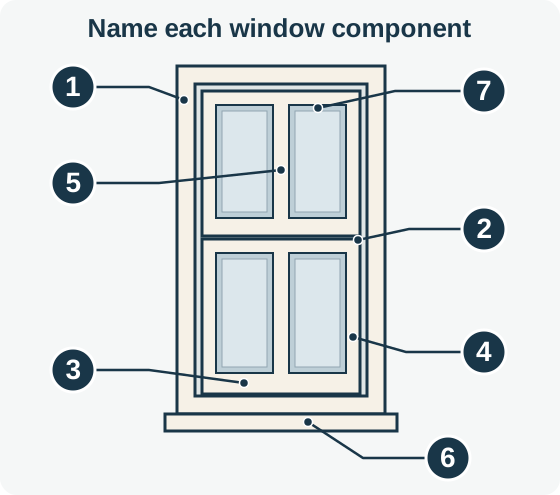
Use component names when recording the work for each opening. This simplified double-hung example omits hardware and hidden details; actual window construction varies.
- Frame: the fixed surrounding assembly.
- Sash: the framed unit that holds the glass; the lower sash is identified here.
- Rail: a horizontal sash member, shown at the bottom.
- Stile: a vertical side member of the sash.
- Muntin: the narrow member separating individual panes in this divided-light example.
- Sill: the lower fixed member at the base of the opening.
- Glazing compound: the weather-facing material at a traditional pane edge. Glass and glazing work should be identified separately from painting.
Concept references: NPS Preservation Brief 9.
A quote for “paint windows” may mean only exterior casings. Another may include sash faces, glazing repairs and selected interior edges. Neither description is sufficiently clear until the surfaces and repairs are listed. Count the windows and agree on the names used in the proposal.
For each opening, record the wall, floor and a simple identifier, such as “east wall, bedroom, left.” Keep overview photographs and close-ups ready for follow-up. This makes it possible to discuss one damaged lower sash without assuming every window needs the same treatment.
Assess repairability before ordering replacements
The National Park Service’s Preservation Brief 9 emphasizes evaluating historic significance and physical condition, retaining repairable original material and considering component repairs. Age or peeling paint alone does not establish that a complete window is beyond repair.
Ask a qualified assessor to distinguish sound wood with failed paint from deterioration that affects joints or strength. Localized damage may allow a repair that retains the rest of the sash. Widespread deterioration, missing parts or an unsafe assembly may require a different approach. The assessment should describe why the proposed extent of repair or replacement is appropriate.
| Finding | Question to resolve | Work to separate from painting |
|---|---|---|
| Peeling finish on otherwise sound wood | Is the failure local, or does it extend through older layers? | Coating assessment and controlled preparation |
| Missing or cracked glazing | Is the glass securely held, and is bedding or other glazing work needed? | Glazing repair or reglazing |
| A soft sill or rail | How far does deterioration extend, and can sound material be retained? | Wood repair, joinery or replacement of a component |
| A sash that binds or will not stay open | Is the cause paint buildup, hardware, cords, balance or distortion? | Operating repairs and final adjustment |
| Broken glass or loose joints | Can the assembly be made safe and serviceable? | Glass work and structural repairs to the sash |
| Water staining below the opening | Is water entering through glazing, joints, flashing or elsewhere? | Diagnosis and correction of the entry path |
These questions are for a professional assessment. Do not force a stuck sash, probe suspect paint or remove glass to gather information for a quote.
Resolve Kansas lead requirements before disturbance
On a pre-1978 house, old window coatings may contain lead, including layers under a newer finish. Repeated movement and preparation can disturb those coatings. Settle the applicable assessment and work plan before scraping, sanding or opening painted-shut components.
Kansas has its own program. The KDHE renovation FAQ identifies restrictions that differ from common federal summaries, including prohibitions on heat guns and lead-presence test kits for surface coatings. Use the Kansas lead-paint guide for the fuller contractor-verification and testing discussion. A negative household swab is not the basis for clearing this work in Kansas.
Older preservation publications remain useful for understanding window construction and repair priorities. Their historical heat-removal, chemical or other work methods should not be treated as current Kansas instructions.
Check the address and the proposed alteration
Before changing historic windows, verify whether the property is listed, within a registered district or a Local Landmark. Leavenworth’s preservation office directs owners to discuss proposed work with staff to determine the necessary review. Describe the actual scope: repainting, localized repair, glass changes, sash replacement or replacement of the entire unit.
Replacement also raises a separate permit question. The city’s window and siding requirements state that window and door changeouts, including like-for-like sizes, require permits and inspection of the framing. That is not a blanket rule about repainting, and it does not replace preservation review where applicable.
Keeping those decisions separate avoids a common scope problem: a painting estimate becomes a replacement project after work starts, but the review, permit, material and budget implications have not been resolved.
Glazing needs a compatible system and its own time
Traditional glazing compound, modern glazing products, wood fillers and perimeter sealants are not interchangeable. Specify the product and where it will be used. Ask who will handle glass removal or replacement, how remaining sound glazing will be assessed and which parts of the opening are included.
Paint readiness depends on the glazing product, its condition and the environment. For a concrete example, the data sheet currently linked from DAP’s ‘33’ glazing product page is dated August 2018. It requires the compound to skin over and reach a firm set before painting. It describes as little as seven days, but more commonly two to three weeks, rather than a next-day repaint. Its specified coating options are exterior oil paint or an oil primer followed by exterior acrylic latex. Read the linked technical sheet for the full conditions; these are product-specific requirements, not a schedule for every glazing compound.
That same DAP sheet excludes stained or leaded glass and insulated glass units with organic seals. A historic specialty pane therefore needs its own suitable glazing specification; this example does not make DAP ‘33’ appropriate for every old window.
The practical question for a quote is whether the selected system fits the job sequence. If glazing requires a later painting visit, include that visit. Do not replace the required wait with the topcoat’s shorter recoat interval. Also agree on temporary protection and how windows will remain secure while repairs are in progress.
Preserve the details that make the window work
Before preparation, decide which original profiles and glass will be retained and what finished appearance is realistic. Heavy paint edges, worn surfaces and earlier repairs may remain visible unless a more extensive treatment is specified. A representative repaired and coated area can establish expectations before repeating the work across the house.
The paint boundary matters around glass, glazing, weatherstripping, hardware and moving surfaces. Ask the contractor to explain the specified glazing-to-glass paint detail and which sliding or sealing surfaces should remain free of paint. Filling every seam or painting every contact surface can interfere with operation.
Keep drainage paths, storm-window openings and hardware serviceable according to the window system. If a storm window is removed for access, include safe storage, reinstallation and any needed adjustment in the scope. A painted exterior is not complete if the window no longer opens or drains as intended.
Separate weather protection from appearance
An opening that admits water needs more than a cosmetic topcoat. Assess glazing condition, sill details, joints and the surrounding flashing. A leak above the frame can stain a sill that is otherwise sound; repainting the sill alone may leave the real problem untouched.
Likewise, a draft or difficult operation does not automatically mean paint failure. Weatherstripping and operating repairs may be useful but are distinct tasks. Discuss them with the person qualified to perform them rather than assuming they are included in exterior painting.
The wood-siding preparation guide explains the broader relationship between moisture correction, sound material and coating preparation. For recurring paint failure, use the peeling and blistering guide to organize observations before an inspection.
Compare window proposals with a shared schedule
A clear window schedule gives each opening a repair category and finish scope. Ask the written proposal to show:
- Exterior and interior surfaces included for each window.
- Glass, glazing, joinery, sill and operating repairs included or excluded.
- Lead-related assessment and the applicable Kansas firm and individual qualifications.
- Required preservation review or replacement permits and responsibility for obtaining them.
- Repair, glazing, primer and topcoat products, with their drying or curing stages.
- Expected appearance, retained historic details and a representative sample where useful.
- Access, protection of occupied rooms, security during work and return visits.
- Final checks for operation, glazing and any disturbed storm-window components.
If a proposal assumes every window is in the same condition, ask how additional findings will be priced. A window-by-window record makes it easier to prioritize urgent repair while preserving serviceable components elsewhere.
Describe the house age, number of affected windows, visible glazing or wood damage and operating problems in the quote form. Keep photographs and any historic-review correspondence ready for follow-up. The house-painting planning guide can help coordinate the window work with the rest of the project.
Browse the painting guide library for related preparation and finish decisions.