
PAINTING GUIDES · LEAVENWORTH
Painting vinyl siding: color, heat and preparation
Leavenworth Painting · Published October 28, 2026
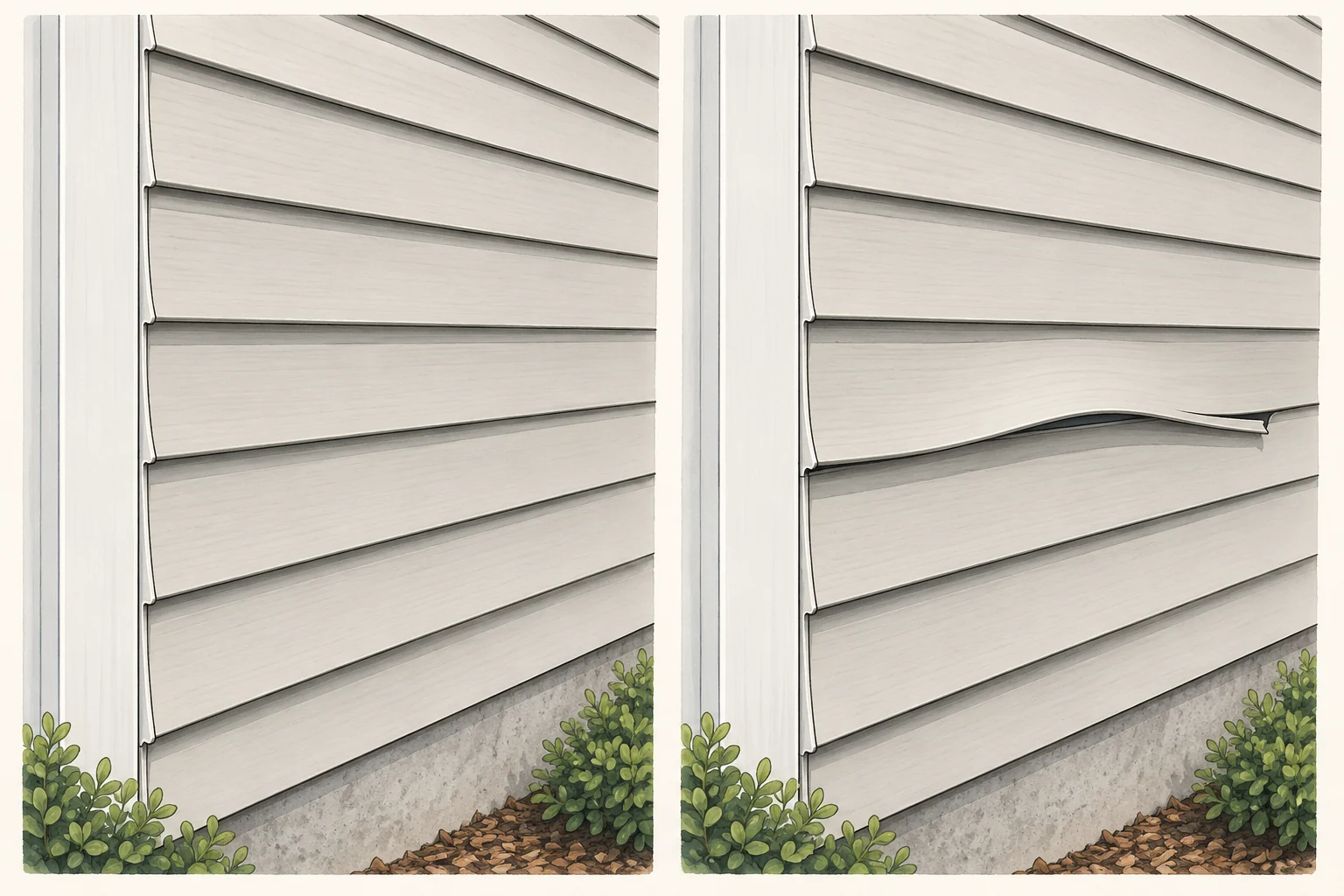
Vinyl siding can be repainted when the siding is sound, properly installed and suitable for the proposed coating and color. The decision depends on more than whether paint will stick. Heat absorption, the exact tint formula, the siding manufacturer’s instructions and any remaining warranty all matter. Painting does not straighten distorted panels or repair the wall behind them.
Before requesting exterior painting in Leavenworth, identify the siding if possible and decide whether the goal is a color change, a more uniform appearance or correction of a particular defect. Those goals can lead to different scopes.
Start with the condition of the siding
Walk the exterior from a safe position and record cracks, loose courses, buckled panels, damaged trim and areas that stay wet. Also note whether the siding was painted before. A failing older coating adds an adhesion problem that unpainted vinyl may not have.
| Condition | Decision before painting |
|---|---|
| Intact siding with faded color | Determine whether cleaning alone is sufficient, then assess a compatible repaint |
| Dirt, chalky residue or biological growth | Select a cleaning method accepted for the siding and determine whether residue remains |
| Cracked, loose or distorted panels | Have the siding problem assessed and repaired; paint will not restore shape or attachment |
| Peeling from an earlier repaint | Identify the weak layer and whether a sound base can be established |
| Missing product records or unclear warranty | Seek manufacturer or installer guidance before assuming repainting is permitted |
| A desired deep color | Confirm the exact approved color formulation and product combination before buying paint |
A limited painted sample can help assess appearance and compatibility after the condition is understood. It cannot establish that every panel is securely installed, that the assembly drains correctly or that the siding warranty permits the change.
Why a darker color is a technical decision
Vinyl responds to heat. Changing its finish can change how much solar energy the surface absorbs. A conventional darker repaint can therefore create a distortion risk that did not exist with the original lighter finish.
Specially formulated color systems can offer additional choices. Sherwin-Williams’ VinylSafe collection includes a limited selection of darker colors and lists the compatible paint lines. The manufacturer qualifies that use for sound, stable vinyl. This is an example of a specific system, not permission to use any dark paint or to repaint damaged siding.
The word “black,” a color chip or a color name copied from a different brand is insufficient. Confirm the exact formula in the exact product. A store match that looks similar can be a different formulation. Likewise, a color approved in one coating system should not be assumed acceptable in another.
Avoid treating a light-reflectance value as the sole test. Product documents may set their own color limits and exceptions. Those conditions belong to the named product and siding; they are not a universal rule that overrides the siding manufacturer’s instructions.
Check both manufacturers before approving the color
The paint manufacturer addresses its coating and color system. The siding manufacturer addresses the installed material and its warranty. Both sets of requirements can affect the project.
Sherwin-Williams’ vinyl-painting guidance specifically tells homeowners to check whether painting will affect the siding warranty. Do that before preparation starts. If the original manufacturer cannot be identified, document that uncertainty and discuss the implications before choosing a repaint.
Questions worth resolving in writing include:
- Does the siding manufacturer permit field painting of this product?
- Are there color, heat, preparation or coating restrictions?
- Does repainting affect the remaining siding or factory-finish warranty?
- Is the selected color supplied in the manufacturer’s required tint formula?
- What coverage, if any, applies to coating adhesion and what excludes substrate distortion?
A paint warranty and a siding warranty cover different things. An attractive color sample does not answer either question, and a contractor’s workmanship promise should not be read as extending a manufacturer’s coverage.
Clean without creating another problem
Paint needs a clean, dry, suitable surface. Ask how dirt, chalking and other contamination will be removed, what cleaning product is specified and how residues will be rinsed away. Choose the washing method from the installed siding’s instructions and the condition of the house.
Higher pressure is not automatically better cleaning. Water can reach places where it does not belong, and damaged or poorly attached panels need repair before washing. The work plan should protect openings, electrical equipment, nearby finishes and landscaping. It should also allow the siding and affected joints to dry before coating.
If painted wood trim beside the vinyl may contain lead, that adjacent work still needs its own Kansas lead-safe plan. The material used for the main wall does not settle the age or condition of every painted component on the house.
Primer and coat count depend on the system
Some paint products allow direct application to sound, prepared vinyl. Other conditions require a primer or a different preparation plan. Do not add a primer simply because it sounds more thorough, and do not omit one because a can says “paint and primer.” Follow the current instructions for the actual finish, substrate and existing coating.
The proposal should identify the product, approved color formula, surface preparation, any primer, application method and required coverage. If a previous repaint is peeling, a bonding primer cannot make an underlying loose layer sound.
Ask how the painter will evaluate a representative area and what would cause the plan to change. A test area is especially useful when the old coating is unknown. It should answer a specific compatibility or appearance question, with the timing and evaluation appropriate to the product; it is not a promise of a particular number of maintenance-free years.
Keep movement and drainage working
Siding is an assembly of panels, trim, joints and drainage details. Painting should not turn it into a sealed sheet. Do not accept an instruction to fill every visible opening without reference to the siding’s installation details.
Have the contractor identify joints that are intentionally open, surfaces that move against each other and areas that must remain serviceable. If panels need reattachment or replacement, settle that scope first. Painting over an installation defect can make it harder to recognize without correcting it.
This is also why a painted wall should be assessed beyond its largest flat area. Inside corners, utility penetrations, trim transitions and previous repairs can need more attention than the center of a panel.
Compare repainting with targeted repair or replacement
Repainting makes the most sense when the material remains serviceable and the problem is largely finish or color. If much of the siding is brittle, distorted, poorly attached or associated with concealed moisture damage, price the material work before comparing paint brands.
A useful comparison keeps the goals consistent. A repaint quote may improve color while retaining existing seams, trim and defects that are outside the painting scope. A replacement quote may change those components and involve different installation work. Ask both proposals to state what is included rather than comparing only the final total.
For a partial repair followed by painting, confirm availability of compatible replacement panels and how their texture and profile will meet the retained siding. A single color can help unify appearance, but it cannot make different profiles identical.
Plan the weather window and maintenance record
Suitable weather means appropriate surface conditions as well as air temperature. Direct sun can heat the siding beyond the nearby air; rain, dew and cool conditions can affect the developing coating. Use the exterior painting season guide to discuss the sequence for cleaning, drying and application.
After completion, retain the exact product and tint records, preparation notes and dated photographs. Inspect changes over time rather than assuming a universal repaint interval. New distortion, cracking or persistent moisture should be assessed as a siding problem; normal finish wear may call for a coating-maintenance decision. See how to decide when to repaint for a condition-based checklist.
In the quote form, describe the current siding color, desired color family, visible damage and whether the surface has already been painted. Keep manufacturer records and photos ready for follow-up. The painting planning guide can help organize the rest of the project.
Browse the painting guide library for related preparation and finish decisions.